8 Ways to Save on Prescription Drugs I've Actually Tried
What the pharmacy charges is not what you have to pay. Here are 8 ways to cut prescription costs that actually hold up.
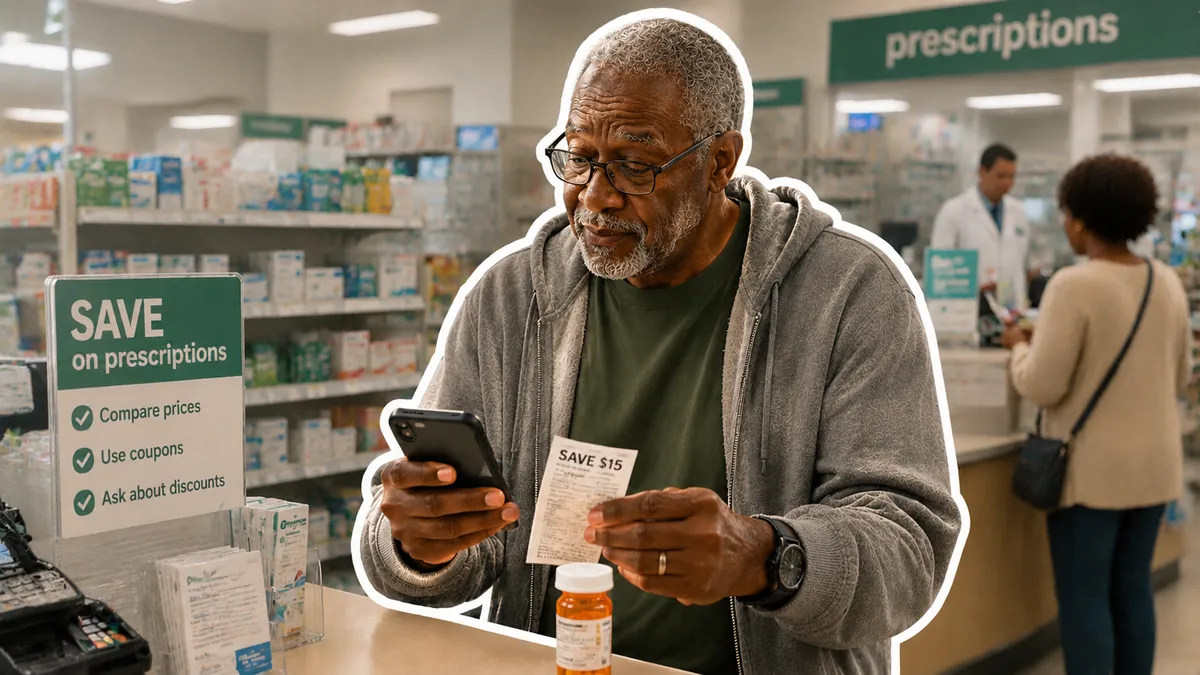
My pharmacy handed me a $68 receipt and I stood there long enough that the person behind me cleared their throat. That is not a number I can absorb without checking my options, so I went home and tested every prescription savings method I could find. I am leaving out anything with a two-week waitlist or a catch buried in the fine print. These eight held up.
- Check GoodRx Before You Pay Anything
Go to GoodRx.com or download the app, type in your medication name and zip code, and it shows you the discounted cash price at every pharmacy near you with a free coupon attached. No account needed, no prescription required to look things up, and the savings are real: I have gotten discounts between 30 and 80 percent depending on the drug. You hand the coupon to the pharmacist the same way you would hand over an insurance card. - Try Cost Plus Drugs for Generics
Mark Cuban launched Cost Plus Drugs in 2022 with one idea: sell generics at the manufacturer's cost plus a 15 percent markup and a $3 pharmacy fee. Some medications that run $40 at a chain pharmacy cost under $5 here, which is the kind of difference that makes you question every price you have ever paid at a pharmacy counter. The selection is not complete yet, but it is growing, so check the site before you write it off. - Ask for the Generic. Specifically.
Your doctor does not automatically prescribe the generic version of a drug, and if you do not ask, you are likely getting whatever brand name they have been defaulting to for years. The FDA requires generics to have the same active ingredient, strength, dosage form, and route of administration as the brand name, so the medical difference is essentially zero. Ask at the appointment: "Is there a generic for this?" and if they say yes, ask them to write for that specifically. - Look Up Patient Assistance Programs on NeedyMeds
If your income is low enough, the manufacturer of your medication may offer a program that provides the drug at no cost or close to it. NeedyMeds.org is a nonprofit that lets you search by drug name or manufacturer to find which programs exist and what the income requirements are. A coworker from one of my catering gigs qualifies for one through this site and has not paid for his medication in over a year. - Use Walmart's $4 Prescription List
Walmart sells hundreds of generic medications for $4 for a 30-day supply or $10 for a 90-day supply, no insurance and no Walmart+ membership required. The list covers drugs for blood pressure, diabetes, cholesterol, thyroid conditions, anxiety, and common infections. If your medication is on the list, this is one of the fastest ways to cut what you are paying without changing anything else about how you get your prescription filled. - Check Amazon Pharmacy and RxPass
Amazon Pharmacy prices its medications competitively on their own, but Prime members may be eligible for RxPass, a $5 monthly subscription that covers over 50 common generic medications with no additional cost per fill. Check Amazon Pharmacy to see if your prescriptions are included, because if two or three of your monthly medications are on the list, it pays for itself immediately. Home delivery is included, which cuts out the pharmacy trip entirely. - Switch to a 90-Day Supply
Every time a pharmacy fills a 30-day prescription, it charges a dispensing fee, and if you are filling monthly, that fee hits twelve times a year on the same medication. Most insurance plans and mail-order pharmacies offer 90-day supplies at a lower per-pill rate, which means you pay the fee four times a year instead of twelve and often get a better unit price on top of that. If you are on a stable long-term medication, ask your doctor to write for 90 days at your next appointment. - Your Copay Is Not Always the Best Price
Your insurance copay is not automatically the cheapest way to fill a prescription, and in many states pharmacies are legally restricted from volunteering that information to you. Before you hand over your insurance card, check GoodRx for the cash price at that same pharmacy, because sometimes the coupon price is lower than what your insurer is charging you. Catching even one or two of these discrepancies across a year of refills can add up to real money.
Most of these stack. Ask for the generic version, switch to a 90-day supply, and check GoodRx before every fill. Add NeedyMeds to the list if your income may qualify you for a patient assistance program. That combination is how you stop defaulting to whatever the pharmacy charges and start actually controlling what you pay.
