Grocery Delivery: What I Tried, What I Kept, What I Dropped
tested four grocery delivery services over six months, and the differences in fees and pricing were bigger than she expected. Here's what she dropped, what she kept, and the one number that surprised her most.
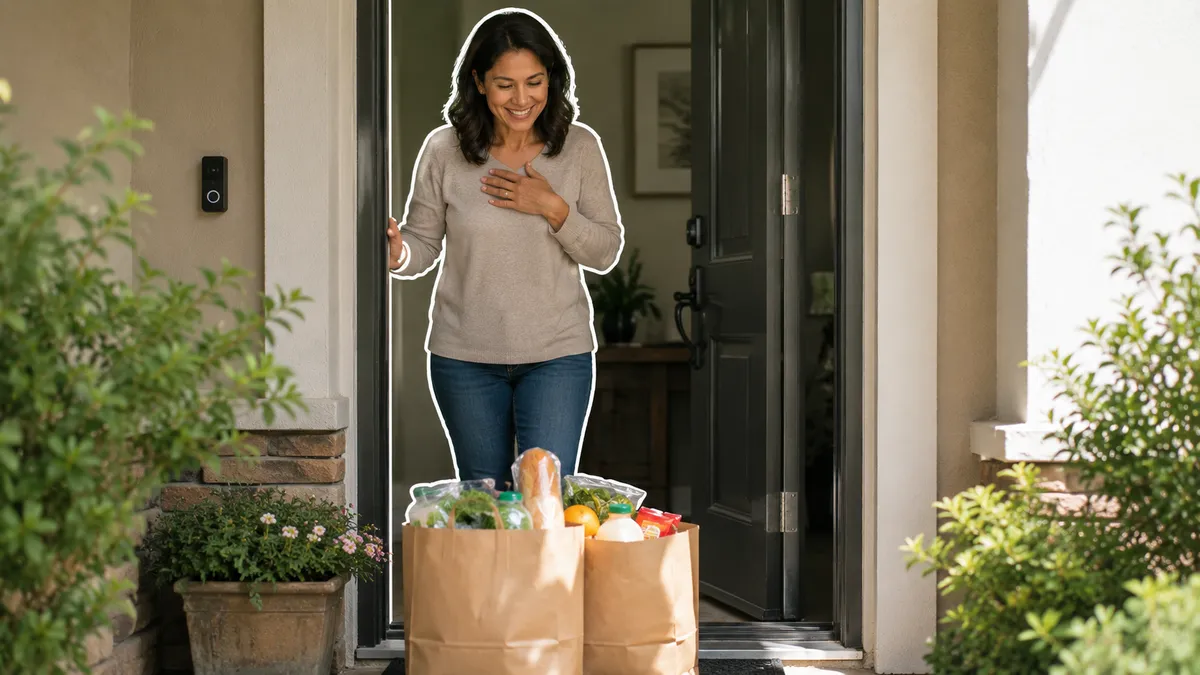
The first time I actually stood at my front door watching a grocery delivery arrive, I remember thinking this either saves me an hour of my week or turns into an expensive habit I'd need to justify to myself. I had just sent my youngest off to college and was rethinking basically every household routine I had. I ended up trying four different services over about six months. Some I loved, some I quietly dropped, and one I'm still using a year later. If you're thinking about giving delivery a shot, there's a real range of options worth comparing in your area right now.
The Fee Stack Nobody Talks About
The headline price on any delivery service isn't the real price. There's the membership or per-order delivery fee. Then a service fee on top of that. Then a tip. And on several major platforms, the groceries themselves are priced higher than they would be on the store shelf.
That last part is the one most people don't catch going in. Instacart, for example, sets its own item prices rather than using the in-store shelf price at many retailers. Depending on the store and the item, those prices can run noticeably higher than what you'd pay in person. On a $100 cart, even a 10% markup costs you $10 before any fees or tip start adding up.
Service fees typically run another 5% on top of the subtotal. Tips are expected and 10% is considered the floor. Add it all up and a $100 grocery run can land at $125 or more. That's not an argument against delivery. It's just the math you should run before you pick a plan.
What I Tried and Quietly Walked Away From
I used Instacart for about three months. The app worked well, the shoppers were mostly reliable, and I liked being able to pull from multiple stores in one order. But the markup stacked against the service fee stacked against the tip made my accountant brain twitch every single checkout. I was paying more per item and tipping on that inflated total.
I also tried my local grocery chain's own delivery service for about two months. No price markup, which I appreciated. But the substitution policy was maddening. They replaced my pasta sauce with a store brand and didn't ask. Twice. The delivery windows were narrow and the app kept glitching. I stuck with it longer than I should have out of stubbornness.
The third service I tried was Shipt, because a friend talked me into it. The app is clean and works well if you do most of your shopping at Target. But I don't, so the value wasn't really there for my household. That's the thing with these services: the right fit depends almost entirely on where you already shop.
The One I Actually Kept
Walmart+ is the one I'm still using. The membership runs $98 a year or $12.95 a month as of 2025, and delivery is free on orders over $35. More importantly, Walmart prices delivered groceries at the same rate as in-store. No markup.
When I first signed up, I pulled out an old receipt and compared it item by item against the cart I'd built in the app. The prices matched. That settled it. For anyone who already shops at Walmart regularly, the fee pays for itself quickly. At $98 a year, you'd need to save roughly $8 per trip on gas and time to break even. I was clearing that without trying.
The membership also includes a Paramount+ subscription and fuel discounts at Walmart and Murphy stations. I wouldn't sign up just for the streaming add-on, but if you were already paying for Paramount+ separately, the membership basically covers itself on that alone before you even count the grocery delivery.
The Impulse Buy Effect
Something I genuinely didn't see coming: my weekly grocery bill dropped about $35 to $40 after switching to delivery. Not because the food was cheaper. Because I was shopping from a list instead of from the store.
The store is designed to sell you more than you came for. End caps, checkout displays, buy-two-get-one signs at exactly eye level, the bakery smell when you walk in. I'm not weak, but I'm not immune either. Shopping from an app cuts almost all of that out. You search for what you need, you add it, you check out. Nothing jumps in the cart unless you put it there.
At $35 a week, that's $1,820 a year back in my pocket. Against a $98 membership fee, the math is honestly a little embarrassing. I wish I'd run those numbers before I spent six months convincing myself delivery was a luxury I couldn't justify.
Three Things to Check Before You Commit to a Membership
First, make sure the service delivers from a store you actually use. Shipt works well for Target and Meijer shoppers. Amazon Fresh is strong for Prime members and covers most major markets, but availability varies by zip code. Paying for a membership that doesn't deliver from where you actually shop is just money gone.
Second, check the markup policy before you pay for anything. It's usually in the FAQ or the help section. If it's buried, test it: add a few items to a cart and compare the prices against the store's own website. The difference will show up immediately if there is one.
Third, look at the minimum order for free delivery. Most services waive the fee at $35 or $50. If your household is smaller, you may end up adding items just to hit the threshold. That's not saving money. That's just spending differently.
Grocery delivery has gotten genuinely competitive over the past couple of years, and what's available in your area right now may look different from what you tested even a year ago. Pricing, coverage, and membership perks have all shifted. Spending a few minutes comparing options before you default to the first service name you recognize is worth it.
