How We Keep Friendsgiving Under $20 a Person
One group chat and a Venmo request at the end of the night turns a $150 Friendsgiving into $20 a person. The trick is assigning dishes before the grocery run, not after.
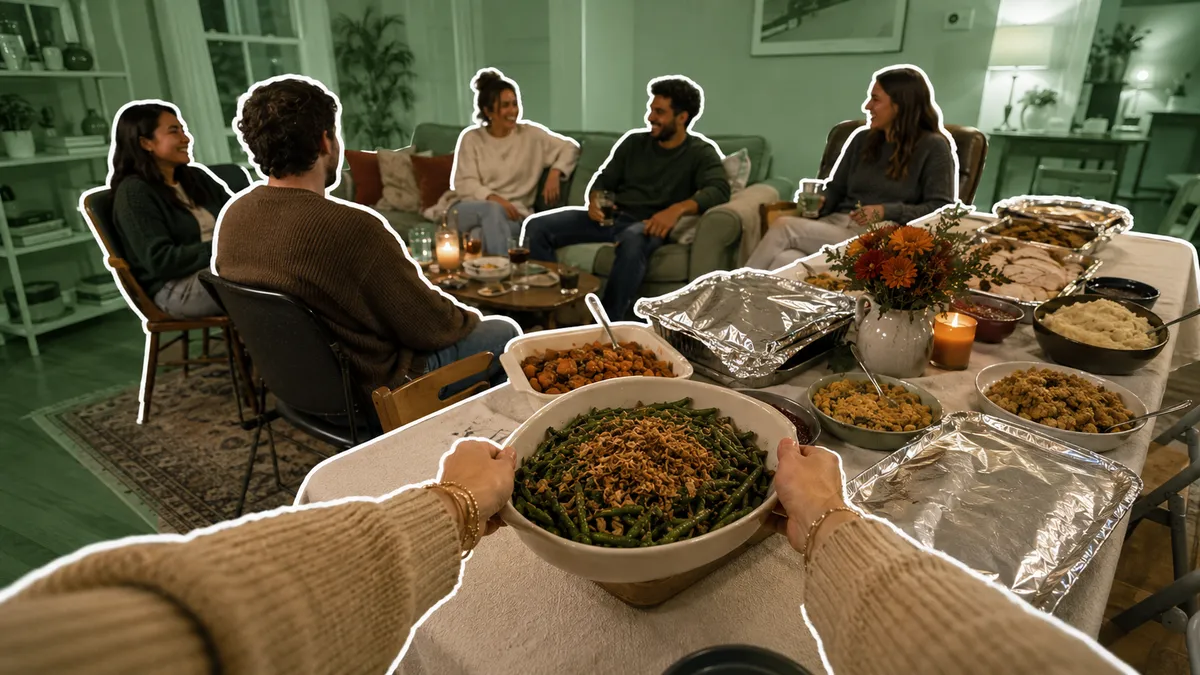
Hosting Friendsgiving for eight people can run $150 or more when one person buys everything, then just eats the cost or spends a week hinting for Venmo requests that never come. Split the list ahead of time on a shared note and pay each other back through Venmo the same night, and the same dinner drops to about $20 a person. The only rule that matters: dishes get assigned before anyone goes grocery shopping, not after four people show up with the same tray of mac and cheese.
The Group Chat Is the Whole System
My friend group figured this out after the second Friendsgiving where we ended up with three bags of dinner rolls and no vegetable that wasn't a can of cranberry sauce. Now the host starts a group chat two weeks out with one message: who's coming, and a running list of what's needed. Turkey or a main, a starch, a vegetable, a dessert, drinks. Everyone claims a slot in the chat before anyone touches a grocery cart.
This isn't complicated, but it only works if it happens first. The order is what saves the money. Once people are already at the store, they buy what's easy, which is usually a side dish, and the host ends up covering the expensive stuff, the turkey or ham, alone.
Splitting the Actual Cost, Not Just the Dishes
Assigning dishes handles the labor. It doesn't handle the fact that a turkey costs more than a bag of rolls. The American Farm Bureau Federation's annual survey on Thanksgiving dinner costs has tracked the classic ten-person meal running well past $60 for the core items alone, and that's before anyone brings a side or a bottle of wine. If one friend gets stuck buying the turkey and another spends $6 on a can of green beans, splitting by dish isn't splitting evenly.
We fixed this by adding a second layer on top of the dish list: everyone logs what they actually spent in a shared note in the group chat, then the host adds it up and tells each person what they owe or are owed. If total spending across eight people comes out to $160, that's $20 a person no matter who bought the expensive stuff and who grabbed the cheap stuff.
Using Venmo to Settle It the Same Night
The money part is where most friend groups fall apart, not the cooking part. Somebody always means to pay you back and forgets by the following week. We settle everything the night of, before people leave. Whoever spent more than their $20 share sends a Venmo request right there in the living room, and whoever spent less pays it on the spot. Nobody leaves owing anybody anything.
Venmo works for this because it's instant and everyone already has it, but a shared note works just as well as the tracking tool if your group is small. For a bigger group, or one that hosts often enough that manual math gets old, an app like Splitwise tracks who owes what automatically and settles it in one tap instead of five separate Venmo requests.
How to Run It Without Extra Effort
- Two weeks out, start the group chat and list every dish the meal needs, including drinks.
- Have each person claim one item in the chat before anyone shops, so nothing gets duplicated and nothing gets skipped.
- Ask everyone to note what they spent, even a rough number, in the same chat once they've shopped.
- The night of, add it all up and divide by the number of people, then settle the difference through Venmo before anyone heads home.
What Actually Keeps It Under $20
The number only holds if the group stays honest about the split, including the host. It's tempting for whoever's hosting to just eat the extra cost of paper plates or the extra folding chairs, but that's how the $20 number creeps up to $30 without anyone noticing. Add those small extras to the group total too. If someone's bringing wine that costs more than the average dish, that's fine, but it should count toward their share, not get treated as a separate gift.
Friendsgiving works because nobody's on the hook for the whole thing, but that only holds if the money actually gets split the same way the labor does. I've watched this exact system turn a stressful, expensive night into something closer to what the real cost of staying close with friends should feel like: worth it, without the quiet resentment of being the one who always pays for everyone's dinner.
