HVAC Replacement Programs That Can Cut Your Bill
Replacing an HVAC system is one of the bigger home costs you will face, but federal credits, utility rebates, and state programs may stack in ways most contractors won't walk you through. Here's where to look before you sign anything.
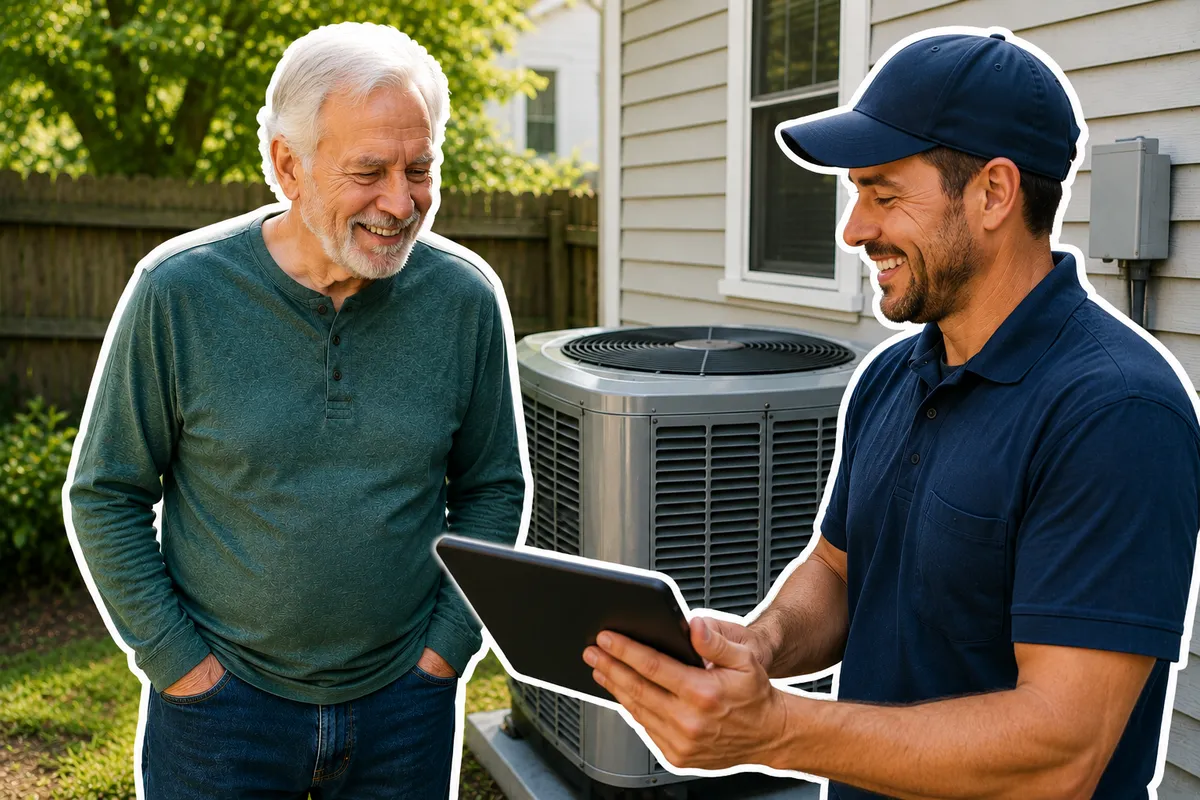
Our HVAC unit was 18 years old and we both knew what was coming. It started short-cycling in the spring, ran harder than it should have through July, and finally quit during a week of high-90s heat. When the HVAC tech came out, he handed us a number that made my wife and me trade a look. I did what I always do when a number surprises me: I opened a dozen browser tabs and went all the way in. What I found was a stack of programs I had no idea existed. Homeowners in your state may be sitting on credits and rebates they have never looked for, and comparing what is available takes less time than the first contractor call.
The Federal Credit Most Installers Don't Walk You Through
The Inflation Reduction Act expanded a tax credit called the 25C Energy Efficient Home Improvement Credit. If you install a qualifying heat pump, you may claim up to 30% of the cost, with a cap of $2,000 per year. For central air conditioners or air handlers, the cap is $600. Gas furnaces have a separate $600 cap. These are direct reductions in what you owe at tax time, not deductions from your income. That distinction matters.
The catch is that the equipment has to meet specific efficiency thresholds. Your installer should know which units qualify, but I would not take that on faith alone. ENERGY STAR maintains a list of qualifying products and credit amounts on their site. Check it before you buy anything. The credit applies to installations through 2032, so there is no manufactured urgency here, but if the unit is already failing, this year works just as well as any other.
Your Utility Is Probably Offering a Rebate Right Now
Most major utilities offer rebates for ENERGY STAR certified HVAC equipment, and the amounts vary more than you would expect. Some pay $200 on a central air unit replacement. Others pay $500 to $1,000 or more on high-efficiency heat pumps. I had no idea what ours offered until I actually looked it up.
ENERGY STAR's rebate finder lets you enter your zip code and pulls up available programs from your utility and state at the same time. It took me about 10 minutes. We found a $400 rebate from our local utility that not one contractor mentioned when we called for quotes. The check showed up about six weeks after installation. If I hadn't gone looking, that $400 would have stayed on the table.
What the DSIRE Database Has That Most Articles Skip
State and local programs are where things get more complicated, and sometimes where bigger money appears. Beyond federal credits and utility rebates, many states run their own incentive programs: direct rebates, low-interest financing, or both. The amounts and eligibility requirements vary by state and sometimes by utility district within the same state.
The best single resource for finding them is the DSIRE database, run by North Carolina State University, which covers federal, state, utility, and local programs in one searchable place. If you are in your state, it is worth 15 minutes here before you commit to any equipment purchase. Programs get funded, expire, and launch on different timelines, so checking close to when you are ready to buy gives you the most current picture.
One thing worth knowing: some of these programs, especially at the state level, have annual funding caps and close when the money runs out. If you are weighing whether to replace now or wait another season, checking whether active programs in your state still have funding is worth a few minutes of your time before you decide.
Income-Based Programs That Go Further Than a Rebate
If household income is lower, there are programs that can cover a much larger share of the replacement cost. The federal Weatherization Assistance Program helps income-eligible households with energy efficiency upgrades, including HVAC systems. It is administered through state energy offices, so availability and wait times vary by location. The Department of Energy's site has a directory to help you find your local program contact.
The Inflation Reduction Act also created the High-Efficiency Electric Home Rebate Act, sometimes called HEEHRA. Income-qualifying households may be eligible for up to $8,000 toward a qualifying heat pump and up to $1,750 for a heat pump water heater. Rollout has been expanding through 2025 and into 2026, but not every state has fully launched. Your state energy office is the right place to check whether the program is available and accepting applications in your state.
Run the Numbers Before Anyone Pulls a Permit
The mistake I almost made was waiting until after I had contractor quotes to look any of this up. By then you are negotiating blind. When you already know a federal credit covers 30% of equipment costs and your utility is paying $400 back, you walk into that conversation differently.
Depending on equipment type, your state, and household income, it is realistic to see $1,500 to $3,000 or more come off the true cost of a replacement when you layer federal credits, utility rebates, and state programs together. That does not make a major HVAC job cheap. But it changes the math enough to matter. The programs are there. What takes effort is finding which ones apply to your situation before anyone starts the paperwork.
