What Your Old Collectibles Are Actually Worth
The first offer on old coins or china is almost never the real number. A quick search before you sell can turn a lowball offer into three or four times more.
A coin dealer or pawn shop counter is not where you find out what something is actually worth. It is where you find out what they are willing to pay, and those are two very different numbers. Sites like WorthPoint and eBay's sold listings pull up real recent sale prices instead of asking prices, and people who check before walking into a shop often learn their old coins, china, or records are worth three to five times what they were just offered.
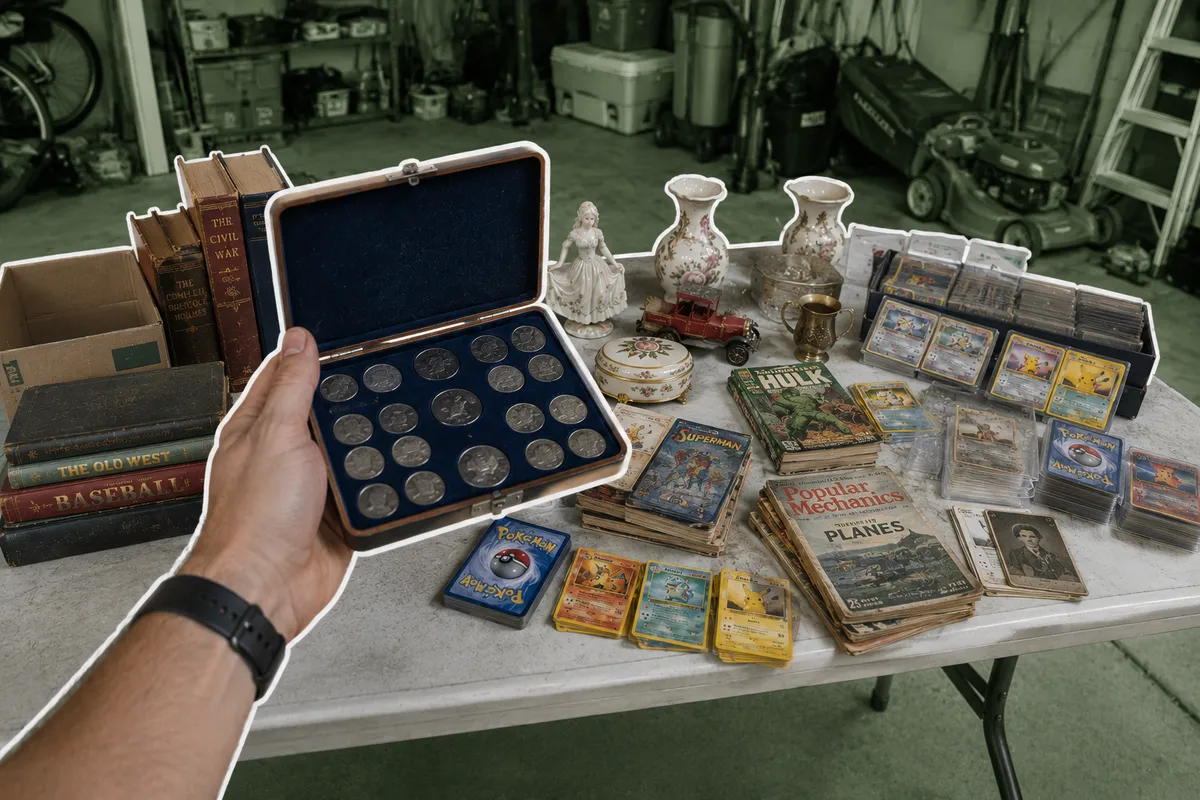
I found this out cleaning out a hutch full of my mother-in-law's old dinnerware and a cigar box of coins my husband had been holding onto since he was a kid. I laid it all out on a folding table in the garage like I was getting ready for a sale, then spent twenty minutes on my phone before I let a single piece go. Good thing I did. A few of those pieces were worth real money, not garage sale money.
Why the First Offer Is Rarely the Real Number
Pawn shops and even some antique dealers make money on the spread between what they pay you and what they can resell it for. That is the business, and there is nothing wrong with it, but it means the first number you hear is built to leave room for their profit, not to reflect true value. A shop looking at a box of old silver coins or a set of vintage china has no obligation to tell you what a collector would actually pay for it.
The gap gets bigger with anything that has collector demand behind it, since that is exactly the kind of item a general pawn shop is least equipped to price. Coins, fine china patterns, vinyl records, and old jewelry all fall into that category. A shop that turns over phones and power tools all day is not tracking what a 1964 Kennedy half dollar in decent condition sold for last month.
How to Check a Real Price in a Few Minutes
WorthPoint keeps a database of past auction results and sold listings across categories like coins, china, glassware, and collectibles, and a basic search will show you what similar items actually sold for recently, not what someone is hoping to get. eBay does something similar for free. Search for your item, then filter results to sold and completed listings instead of active ones, and you will see real closing prices from actual buyers.
This one filter changes everything. An active listing asking $200 for a figurine means nothing if it never sells. A sold listing at $85 tells you what a real buyer actually paid. Always compare against sold prices, never asking prices.
Where to Check Specific Kinds of Collectibles
Coins have their own dedicated pricing resources that go deeper than a general search. PCGS CoinFacts lists values by year, mint mark, and condition, which matters a lot with coins since condition alone can swing the price several times over. If you have old silver coins from before 1965, they may also carry melt value based on current silver prices on top of whatever collector value they have.
China and dinnerware patterns can be looked up by name and manufacturer on Replacements.com, which tracks current prices for discontinued patterns piece by piece. A single dinner plate in a retired Lenox or Noritake pattern can be worth more than an entire set of something more common. Records are their own world too. Discogs shows marketplace and sold history for specific pressings, and a first pressing in good condition can be worth far more than a later reissue that looks nearly identical on the shelf.
Condition changes everything. The same coin, plate, or record can be worth three or four times more or less depending on wear, chips, scratches, or whether the original box or sleeve survived.
What to Do Once You Know the Real Number
Once you have a real price range, you have leverage you did not have before. If a shop offers you a fraction of what similar items sold for, you can ask why, sell elsewhere, or list it yourself on eBay or a local marketplace. Selling it yourself usually takes longer and means dealing with photos, shipping, or a buyer showing up at your house, so a lower offer from a shop can still make sense if you would rather have the cash today and skip the hassle. That is a real tradeoff, not a bad deal by default. Just make it with the actual number in hand instead of the one they hand you.
If you are already in decluttering mode, it is worth applying the same instinct to anything you pick up secondhand too, not just what you are selling. I learned some of that the hard way, the kind of thing I wish someone had told me before I made a few bad calls at estate sales, which is exactly what these thrift store lessons cover.
Before you sell anything with real collector interest behind it, whether it is a jar of old coins or your mother's good china, spend the twenty minutes. It is the difference between clearing out a box and actually knowing what was in it.
