Your CGM Might Be Covered and Nobody Told You
Medicare quietly expanded CGM coverage in 2024 to include diabetics not on insulin, but most eligible patients have no idea. If you have diabetes and Medicare, your monitor might already be covered.
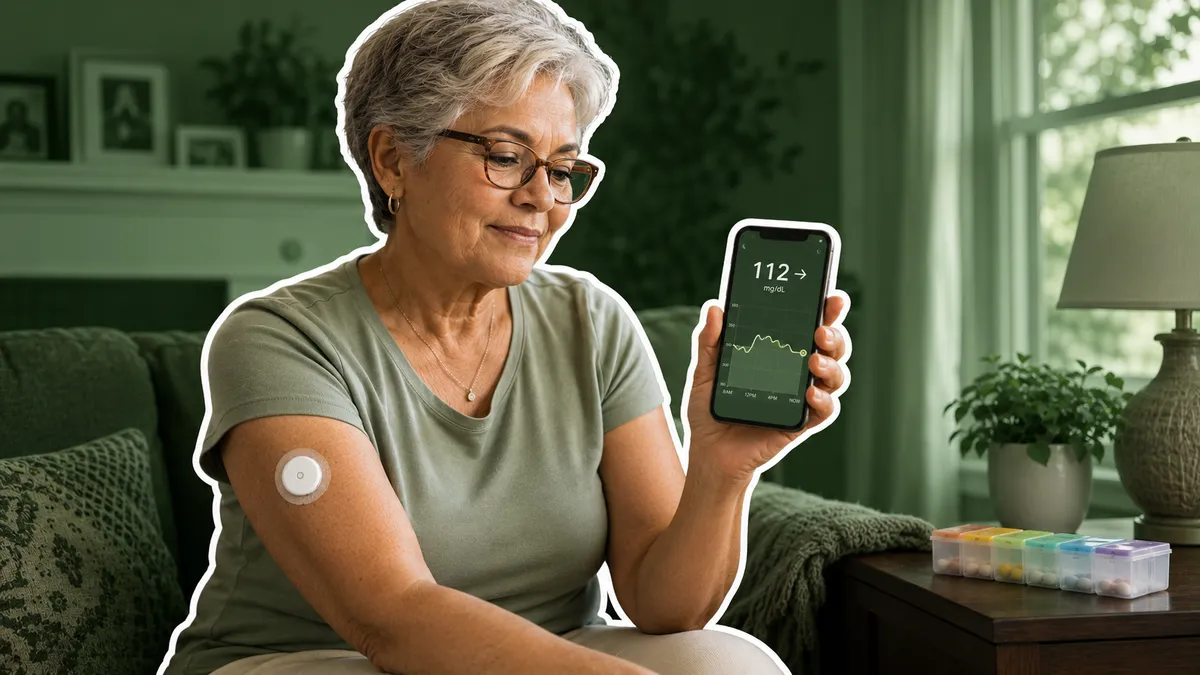
Medicare expanded its coverage for continuous glucose monitors in 2024 to include diabetics who do not use insulin, and the change has not reached most of the people it affects. Devices like Freestyle Libre and Dexcom run more than $200 a month without coverage. Most qualifying patients pay nothing after their Part B deductible, and a significant number of them are still paying full price because nobody told them the rules changed.
What Changed in 2024 and Who It Covers
For years, Medicare covered CGMs only if you used injected insulin. If you were managing your diabetes with metformin, other oral medications, or diet changes, the monitor was not covered under Part B. Millions of people with Type 2 diabetes were excluded from that coverage entirely.
In 2024, the Centers for Medicare and Medicaid Services revised the rules and removed the insulin requirement. Coverage now extends to any Medicare beneficiary with a diabetes diagnosis, as long as their treating physician orders the device and documents medical necessity. If you have diabetes and you are on Medicare, there is a good chance you qualify even if you never checked before.
A continuous glucose monitor is a small sensor, usually worn on the upper arm, that reads your blood sugar in real time and sends the data to your phone or a small receiver. Unlike a fingerstick, which gives you a single number at one moment, a CGM shows you trends throughout the day. That difference matters when you are trying to understand how specific foods, sleep, or activity affect your levels.
What Medicare Covers and What You Pay
Medicare covers CGMs under Part B as durable medical equipment. After you meet your annual Part B deductible, Medicare pays 80 percent of the approved cost. If you carry a Medigap supplement policy, it typically covers the remaining 20 percent, so your out-of-pocket may be zero or near zero.
If you are enrolled in a Medicare Advantage plan, coverage and cost-sharing depend on your specific plan. Most Advantage plans cover CGMs for qualified patients, but the terms vary, so it is worth calling your plan to confirm before you order.
A continuous glucose monitor costs $200 to $300 per month without coverage. Most patients who qualify under Part B pay nothing after their deductible, particularly those with a Medigap supplement in place.
The devices that qualify under Medicare include the Freestyle Libre 2, Freestyle Libre 3, Dexcom G6, and Dexcom G7. Both manufacturers offer Medicare enrollment support on their websites. If you use a Freestyle Libre, coverage and ordering details are at freestylelibre.us. If you use a Dexcom, the same support is available at dexcom.com.
How to Get Your CGM Covered
The process starts with your doctor, not the pharmacy. A CGM purchased over the counter or at a regular pharmacy will not be billed under Part B the same way. You need to order through a Medicare-approved durable medical equipment supplier.
- Ask the doctor who manages your diabetes to write an order for a CGM and document medical necessity in your file. This can be your primary care physician or an endocrinologist. You do not need a recent hospitalization or a specific A1C reading, just documented clinical support for continuous monitoring.
- Find a Medicare-approved DME supplier using Medicare's supplier directory at medicare.gov. You can search by location and equipment type to find one near you or one that ships by mail.
- Order through that supplier. Most CGM suppliers are mail-order, so this does not require a store visit.
- The supplier handles Medicare billing. You pay your cost-sharing amount, if any, after coverage processes.
When you talk to your doctor, mention that you are asking about CGM coverage under the 2024 Medicare expansion. Most physicians who treat diabetes are familiar with the updated rules and will know exactly what documentation is needed.
If You Asked Before and Were Told No
A lot of people on Medicare looked into CGM coverage in the past and were turned away because they did not use insulin. That answer was accurate under the old rules. It is not accurate anymore, and a previous no does not lock you out.
I come across this more than you might expect, people who are managing diabetes carefully on a fixed income, paying $200 or more a month because they assume coverage is not available to them. Some never asked. Others asked years ago and let it go when the rules were different.
If you have a diabetes diagnosis and you are on Medicare, it takes one conversation with your doctor to find out whether you qualify. That conversation costs nothing, and the coverage it could unlock is worth more than $2,000 a year. It is worth asking.
