What a Widow's Social Security Check Actually Looks Like
Survivor benefits can pay up to 100 percent of a late spouse's Social Security check, but claiming at 60 locks in a permanent cut. Here is how the numbers actually work and when switching strategies can pay off.
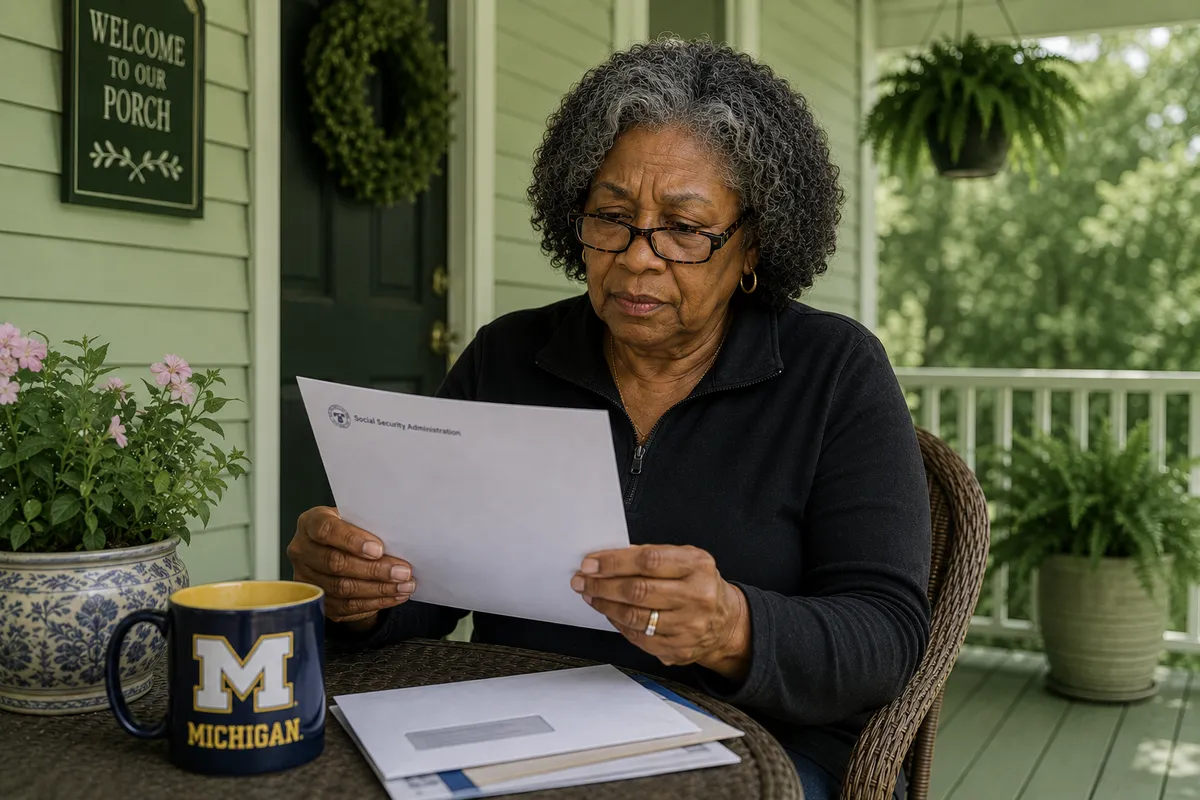
A surviving spouse can claim up to 100 percent of their late husband's or wife's Social Security benefit instead of their own, and that check can start showing up as early as age 60. But claim it the day you turn 60 and it locks in at a reduced amount for the rest of your life, sometimes almost 30 percent smaller than what waiting a few more years would have gotten you.
Someone in my Facebook group brings this up almost every month, usually a woman who just lost her husband and got a letter from Social Security that reads like it was written in another language. I went through the reduction numbers with my own husband years before we ever needed them, because I did not want either of us guessing at a kitchen table with a stack of confusing paperwork and no idea what we were signing away.
Your Check Is Not Automatically Cut in Half
While both spouses are alive, a spousal benefit tops out at 50 percent of the higher earner's Social Security amount. Survivor benefits work differently, and most people do not realize that until they are the one filling out the form. A widow or widower who waits until their own full retirement age can receive up to 100 percent of what the deceased spouse was collecting, or would have collected, instead of their own smaller benefit.
Social Security does not add the two benefits together. You get whichever amount is higher, your own retirement benefit or the survivor benefit, not both stacked on top of each other. If your late spouse earned more over their career, or claimed later and built up delayed retirement credits, the survivor benefit is usually the bigger number.
Claiming survivor benefits at exactly age 60 pays about 71.5 percent of the deceased spouse's full benefit. Waiting until your own survivor full retirement age brings that up to 100 percent.
The Age 60 Option Costs More Than It Looks Like
Sixty is the earliest a widow or widower can start collecting, and for someone who just lost a spouse and lost half the household income at the same time, that early money can feel like the only option. But the reduction is permanent. It does not correct itself once you reach full retirement age. Whatever percentage you lock in at the moment you file is the percentage you keep for life, adjusted only for annual cost of living increases.
The percentage climbs steadily for every month you wait between 60 and your survivor full retirement age, which lands at 66 or 67 depending on your birth year. You can check the exact numbers for your situation and get a real estimate through a my Social Security account, which shows the actual dollar figures tied to your own record rather than a general chart.
You Can Switch Strategies Instead of Locking In Early
This is the part almost nobody explains, and it is the part that saves people real money. A widow does not have to pick one benefit and stay there. You can claim the reduced survivor benefit at 60 to get through the hardest years, then switch over to your own retirement benefit later if delaying it made that number grow larger, potentially all the way to age 70. It can also work the other direction: claim your own reduced retirement benefit early, then switch to the full survivor benefit once you hit survivor full retirement age.
Which order makes sense depends on which benefit is bigger and when, and that is a conversation worth having directly with Social Security or a financial professional rather than guessing from a Facebook thread, mine included. The Social Security survivors benefits page lays out the switching rules in more detail, and it is worth reading before you file anything.
Remarriage Rules Trip Up More People Than You'd Think
If you remarry before age 60, you generally lose eligibility for survivor benefits based on your late spouse's record. Remarry at 60 or later, though, and it does not affect your survivor benefits at all. That single birthday matters more than people expect, and I have seen it change how a friend timed a second wedding once she found out. Widows and widowers with a qualifying disability can also start survivor benefits as early as age 50, a rule that gets missed constantly because most people assume 60 is the floor no matter what.
Get the Actual Numbers Before You File
The letter Social Security sends after a spouse dies gives you a deadline to think about, not a decision to make on the spot. Call the Social Security Administration directly, or sit down with a financial professional who can run both scenarios against your own earnings record before you file anything. There is more ground to cover in senior benefits people qualify for and never claim, and it is worth a look while you are already digging through what you are owed. This is not a decision to rush, and it is not one you have to make with a stranger's chart standing in for your own numbers.